Top AC Unit Tune Up Checklist for Global Buyers?
For global buyers, an ac unit tune up is more than a seasonal service visit. It is a practical check on efficiency, reliability, indoor comfort, and operating risk. The International Energy Agency’s The Future of Cooling report warns that space-cooling energy demand could more than triple by 2050 without stronger efficiency measures. That projection makes preventive maintenance commercially important, especially in hot, humid markets.
A useful checklist should examine refrigerant pressure, electrical connections, condenser coils, evaporator airflow, drain lines, filters, fan motors, and thermostat accuracy. ENERGY STAR recommends professional HVAC maintenance before peak cooling seasons. The U.S. Department of Energy also identifies airflow, coil cleanliness, and refrigerant charge as key factors affecting system performance. Small defects matter. A blocked drain can leave water beneath a rooftop unit. A loose terminal can create unstable operation. A neglected filter can restrict airflow within weeks.
David Richardson, technical curriculum director at the National Comfort Institute, states, “The best time to find a problem is before the system stops working.” That principle supports a documented ac unit tune up process, not a quick visual inspection. Buyers should request measured readings, replaced-part records, safety checks, and photographs. Yet no checklist fits every country perfectly. Voltage standards, refrigerants, climate exposure, warranty terms, and technician qualifications vary. That is where many purchasing plans become too optimistic. A reliable global specification should allow local adjustments while preserving core performance checks, transparent reporting, and evidence-based acceptance criteria.

AC Tune-Up Basics for Global Buyers
AC Tune-Up Basics for Global Buyers
A reliable AC tune-up starts with safety and local conditions. Confirm the unit’s voltage, frequency, and installation requirements before opening the cabinet. Isolate the power supply, then inspect the filter, coils, wiring, fan motor, and drain line. Dust on the indoor coil can reduce airflow, while a blocked drain may cause water damage. In humid regions, drainage deserves extra attention.
Tips: Match the unit to the local climate. Check refrigerant labels and service rules. Ask a qualified technician to test electrical connections, airflow, and refrigerant pressure. Keep dated service records, including filter changes and unusual sounds. A clean filter does not prove the system is healthy.
Global buyers should also examine thermostat accuracy and outdoor-unit clearance. Leaves, sand, and coastal salt can restrict airflow or accelerate corrosion. Test cooling performance after maintenance, preferably at the same room temperature each time. A professional should investigate weak cooling instead of simply adding refrigerant. Refrigerant handling may require approved equipment and trained service personnel in many regions. It is easy to overlook frequency differences when importing equipment. That small detail can create unstable operation, higher energy use, or early component failure. Manuals translated clearly for local technicians are useful, but they are not always enough. Installation quality still matters.
Top AC Unit Tune-Up Checklist for Global Buyers
This checklist summarizes common preventive-maintenance intervals for residential and light-commercial air-conditioning systems.
Filter replacement is usually required more frequently, while coil cleaning, condensate-drain inspection, airflow testing,
electrical checks, and refrigerant-leak inspection are commonly reviewed at least annually. Actual intervals may vary by climate,
system design, operating hours, indoor air quality, and local regulations.
Step-by-Step Inspection of Core AC Components
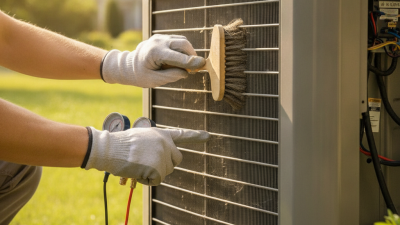
A reliable AC unit tune-up begins with a safe visual inspection. Turn off electrical power before opening the service panel. Check wiring for loose terminals, heat marks, or cracked insulation. Inspect the outdoor coil and remove leaves, dust, and bent fins carefully. Restricted airflow can raise operating temperatures and increase energy use. Measure supply and return air temperatures after the system runs steadily. A useful temperature difference often signals normal performance, but local conditions can affect the reading.
Inspect the air filter, blower wheel, drain pan, and condensate line. A damp pan or slow drain may indicate blockage, poor leveling, or microbial growth. Examine refrigerant lines for damaged insulation and unusual frost. Refrigerant pressure should be tested with calibrated instruments, not guessed from appearance. Verify the capacitor, contactor, fan motor, and compressor connections against the unit’s technical data. Record voltage, current, temperature, and any abnormal sound. Small rattles matter.
I have seen clean coils hide weak electrical components. A checklist is helpful, but it is not infallible. Outdoor humidity, dust, and installation quality can change results. Buyers should request dated test readings, maintenance history, and confirmation that the refrigerant matches applicable local requirements. If a reading seems inconsistent, repeat the test before approving the unit. Reliable inspection leaves evidence, not confidence alone.
Performance Testing, Cleaning, and Calibration Procedures
For global buyers, an AC tune-up should prove performance, not merely produce a clean cabinet. IEA’s The Future of Cooling (2018) projects installed cooling equipment could rise from 1.6 billion units to 4.5 billion by 2050. It also warns that cooling electricity demand may triple. That makes measurement essential. Record entering and leaving-air temperatures, airflow, voltage, running current, static pressure, and operating time. Compare results with approved service data, not generic internet targets.
Cleaning starts with isolated power and a visual inspection. Remove dust from filters, coils, blower wheels, and outdoor heat-transfer surfaces. Flush the condensate route and confirm the drain pan slopes correctly. Then test airflow after reassembly. ASHRAE Standard 180-2018 supports documented inspection and maintenance practices for commercial HVAC systems. Refrigerant checks require calibrated gauges and the specified superheat or subcooling method. Do not guess from pressure. A leak, restricted airflow, or incorrect ambient reading may be the real fault.
Calibration deserves its own record. Verify thermostat accuracy, temperature probes, pressure instruments, and electrical meters against traceable references. Check compressor start-up current and fan rotation. Test safety cut-outs and restart behavior. DOE Energy Saver notes that neglected filters restrict airflow and make cooling equipment work harder. It remains imperfect. A clean coil cannot compensate for poor duct design or undersized equipment. Keep records of weather, load, readings, adjustments, and unresolved anomalies. This evidence helps buyers compare units across climates and electrical systems.
Global Buying Criteria for Service Quality and Replacement Parts
For global buyers, an AC tune-up should measure service quality, not only cooling output.
The International Energy Agency’s The Future of Cooling report projects global air-conditioner stock could reach 5.6 billion units by 2050. That growth makes reliable maintenance essential. Check airflow, temperature difference, electrical current, condensate drainage, fan noise, and refrigerant pressure. Record every reading.
Replacement parts need equal attention.
Verify the exact model, voltage, frequency, capacity, dimensions, and refrigerant type before ordering. Confirm that filters, capacitors, sensors, motors, and control boards meet applicable safety standards. A part may fit physically but still fail electrically. Ask suppliers for batch numbers, test records, installation guidance, and warranty terms. The U.S. Department of Energy recommends regular filter care because restricted airflow increases system workload. Local rules may also control refrigerant handling and technician qualifications.
Service documentation should include photographs, measured values, replaced-part details, and the technician’s name.
ASHRAE guidance supports systematic testing, safe refrigerant practices, and manufacturer-based maintenance procedures. A useful supplier can explain failures without hiding behind generic language. It should also provide parts availability for several seasons, not merely promise fast delivery. This is where many buying checklists remain weak. They measure purchase price, but ignore downtime and repeat labor. A checklist is not a guarantee. Even experienced technicians can miss a loose terminal or a partially blocked drain. Independent inspection, clear acceptance criteria, and follow-up testing reduce that risk.