2026 How to Choose an Animatronic Western Dragon

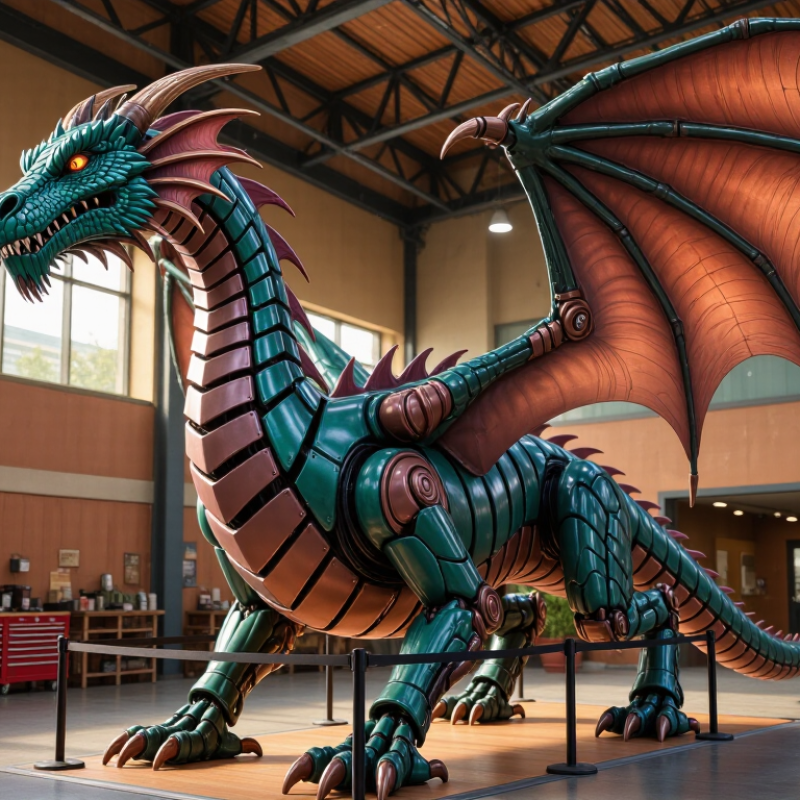
Choosing an Animatronic Western Dragon in 2026 means balancing spectacle with reliability. The right model should suit its setting, audience, operating hours, and maintenance capacity. A towering dragon may look impressive in a showroom, yet feel cramped beneath a low ceiling. Measure the route, doorway, and final display area before comparing designs.

Industry attendance data helps explain why dependable attractions matter. The TEA/AECOM Theme Index and Museum Index 2023 reported 244.6 million visits across the world’s 25 most-attended theme parks. That figure describes park attendance, not demand for dragon figures. Still, it shows the scale of visitor experiences competing for attention. IAAPA’s Global Theme and Amusement Park Outlook also tracks industry performance and investment conditions. Neither report can tell you which dragon will work on your site. That distinction is easy to miss.

Look beyond dramatic photographs. Ask suppliers for movement specifications, sound levels, material details, service intervals, and references from comparable installations. Check how the jaw, neck, wings, and eyes behave during repeated cycles. Request an operating demonstration, not just a short edited video. Confirm what the warranty covers and how replacement parts are supplied. These questions are practical, but they are not exciting. That is partly the point. A small pause between movements may feel more convincing than constant motion, though visitor response depends on context. Use documented specifications and firsthand checks together. This guide explains how to compare those details and choose a dragon that fits your space, budget, and long-term plans.
2026 How to Choose an Animatronic Western Dragon

Define the Dragon’s Venue, Scale, Audience, and Performance Requirements

Start with the venue, not the dragon’s appearance. Measure doorways, ceiling height, turning space, and the route from delivery point to display area. Measure the doorway first. For an outdoor setting, note wind exposure, rain, direct sun, and uneven ground. Indoors, check floor loading, power access, sound levels, and audience circulation. A footprint that fits on paper may still block a fire exit or create a bottleneck when visitors gather.

Choose scale by viewing distance and audience age. A large head and clear silhouette read well across a spacious hall, while fine scales and glowing eyes may disappear from far away. For children, keep moving parts and interactive areas beyond easy reach. Small details matter. Record the dragon’s full height, tail sweep, and maximum movement envelope, not just its standing dimensions. Early estimates are often wrong; a cardboard floor outline can reveal awkward spacing before fabrication begins.

Define the performance in practical terms: how often it moves, how long each sequence lasts, and whether sound is needed. A slow head turn and a measured wing lift can feel dramatic without filling a quiet gallery with noise. Ask how operators will reach controls, inspect joints, and pause movement if something seems unusual. Rehearsal plans may need revision once real visitors arrive, so leave room to adjust timing and audience distance.

Compare Required Movements with DMX512’s 512-Slot Universe Capacity

When choosing an animatronic western dragon, list every movement before comparing control systems. A head may need separate channels for turning, tilting, jaw motion, and eye direction. Add wing joints, a swaying tail, and lighting, and the channel count can climb quickly. DMX512 provides 512 slots in one universe, but those slots carry control values; they do not equal 512 independent movements. Each fixture or controller may use several slots.

For example, a simple setup might assign eight channels to the head, twelve to paired wings, six to the tail, and four to the jaw. That is 30 slots before lights or other effects. Keep a channel plan, and check each controller’s actual channel requirements rather than guessing from the number of moving parts. That adds up fast. If the design exceeds one universe, additional universes or a local motion controller may be needed.

DMX sends commands; it does not power motors or replace mechanical limits and emergency stops. Test the full movement sequence early. I would leave spare channels, though how many depends on the final design. A spreadsheet can feel fussy, but discovering a channel shortage after the dragon is assembled is worse.

Check Electrical Safety and Risk Controls Against IEC 60204-1 and ISO 12100

When choosing a Western dragon animatronic, treat its moving neck, jaw, wings, and tail as machinery, not scenery. IEC 60204-1 covers machinery electrical equipment, including supply isolation, protective bonding, overcurrent protection, and control circuits. Ask for wiring diagrams, rated voltage, protective-device details, and documented test results—not just verbal assurances. Look closely at cable entries and joints. Dust, repeated flexing, and even a damp cleaning cloth can expose weak points. ISO 12100 calls for identifying hazards, estimating and evaluating risks, then reducing them through design and safeguards. Check pinch zones around the jaw, guarded actuators, reachable stop controls, and behavior after power loss.

The U.S. Bureau of Labor Statistics’ 2022 Census of Fatal Occupational Injuries recorded 126 workplace deaths involving exposure to electricity. That figure is not specific to exhibits, but it underlines why electrical risks need documented controls. Request a risk assessment covering setup, operation, maintenance, and transport, along with inspection intervals and isolation instructions. A qualified engineer should check the installation against the machine design and applicable local requirements; citing standards alone does not prove conformity. Do not rely on a pristine showroom demonstration. Real use is messier. Paperwork can also miss a pinched lead beneath a moving panel, so inspect the actual mechanism before acceptance.

Assess Outdoor Exposure Using IEC 60529 IP65 Dust and Water-Jet Ratings

2026 How to Choose an Animatronic Western Dragon

Assess Outdoor Exposure Using IEC 60529 IP65 Dust and Water-Jet Ratings

For an outdoor animatronic dragon, IP65 offers a useful starting point. Under IEC 60529, “6” indicates a dust-tight enclosure, while “5” indicates protection against water jets from any direction during testing. That matters near dusty paths or where staff rinse surfaces. Still, IP65 does not mean the figure can be submerged. Nor does it guarantee every moving joint stays dry after years of use.

Check what the rating covers. A control box may carry an IP65 rating, while nearby motors, cable entries, or access panels may have different protection. Look closely at seams around the jaw and neck, where movement can stress seals. Wind-driven rain, cleaning pressure, sun exposure, and drainage also affect real-world performance. IEC 60529 does not rate UV resistance or long-term weathering. It is easy to focus on the label and miss the installation details.

Tips: Ask for test documentation for the relevant enclosure, not just the complete display. Inspect gaskets and cable glands regularly, especially after seasonal setup. Keep water away from open service panels. A small gap can matter. I would also review the site after a hard rain; puddles often reveal problems that a specification sheet cannot.

2026 How to Choose an Animatronic Western Dragon: Assess Outdoor Exposure Using IEC 60529 IP65

How to read this chart: IPX5 uses a water flow rate of 12.5 L/min; IPX6 uses 100 L/min. An IP65 rating means the enclosure is dust-tight (6) and protected against water jets at the IPX5 level (5)—it does not certify protection against immersion or every outdoor condition. Check the product’s installation guidance and protect exposed electrical connections as needed.

Verify Duty-Cycle, Maintenance, and Warranty Claims with Supplier Test Data

2026 How to Choose an Animatronic Western Dragon

A dragon’s duty-cycle claim is meaningful only when the supplier defines “cycle.” Ask whether it means one movement, a full show sequence, or hours of daily operation. Request test logs showing run time, pauses, payload, room temperature, and fault events. Ask for raw logs. A moving jaw and a lifting wing may wear at different rates.

McKinsey’s predictive-maintenance analysis reports potential downtime reductions of 30–50% and maintenance-cost reductions of 10–40%. These are cross-industry estimates, not guarantees for animatronic figures. Numbers need context. Ask suppliers to provide their own endurance-test hours, inspection records, replaced-part list, and maintenance intervals. Check whether tests used the same motors, control settings, and movement speed proposed for your installation. A neat spreadsheet can still hide a tired gearbox.

Compare warranty terms against those records. Confirm what counts as normal wear, who pays for shipping, and how quickly replacement parts can be supplied. Ask whether the warranty covers repeated daily operation or only occasional demonstrations. Keep the answer in writing. Real installations are messier than test rooms: dust gathers around joints, cables flex, and operators may reset a figure mid-sequence. Note that gap, too.

2026 How to Choose an Animatronic Western Dragon - Verify Duty-Cycle, Maintenance, and Warranty Claims with Supplier Test Data

Use this checklist to compare proposals. The example operating assumptions below are planning inputs, not measured supplier results or universal industry standards. Ask each supplier to provide dated, model-specific test records and written contract terms; enter verified results before making a purchase decision.

Evaluation area Metric or calculation Example planning input or buyer-set target Supplier evidence to request Decision check
Duty cycle and operating life
Daily operating schedule Open hours per day × operating days per year Example: 8 hours/day × 300 days/year = 2,400 scheduled hours/year Test schedule showing run time, rest periods, ambient conditions, and the exact production configuration tested Confirm the tested schedule meets or exceeds the planned site schedule.
Movement cycle rate Complete programmed show cycles per hour Example: 6 cycles/hour during an 8-hour day = 48 cycles/day Controller log or time-stamped test record defining what counts as one complete cycle Check that cycle counts include the full motion sequence, not just controller activations.
Annual cycle estimate Cycles/day × operating days/year Example: 48 × 300 = 14,400 cycles/year Supplier’s tested cycle count and inspection records at stated intervals Compare the expected annual total with the documented test exposure; do not treat a short demonstration as a life test.
Continuous-run and recovery test Elapsed run time, pauses, faults, and restart behavior Set the required test duration and rest pattern to match the intended installation Unedited test log or video, fault list, restart records, and the test procedure Verify recovery after scheduled stops and after a simulated power interruption, if relevant to the site.
Motion consistency Repeatability of key poses, travel limits, and show timing Define acceptable variation with the supplier before testing Before-and-after measurements, controller settings, and inspection notes from repeated cycles Look for drift, incomplete movement, unusual noise, overheating, or increasing cycle time.
Maintenance and serviceability
Preventive maintenance interval Recommended inspection interval in operating hours or cycles Require a schedule tied to hours, cycles, or both; enter the supplier’s documented interval Model-specific maintenance manual listing inspection tasks, lubrication points, and intervals Intervals should be clear and compatible with the planned operating schedule.
Routine service time Labor hours for specified routine tasks Set a buyer target based on staffing and access constraints Timed service demonstration identifying tools, technicians, task steps, and access requirements Compare like-for-like tasks; separate routine work from corrective repairs.
Wear parts and spares Part number, expected replacement interval, and lead time Request a priced spare-parts list and a stocked-parts plan for the required service period Parts list, recommended stock quantities, availability statement, and replacement instructions Confirm critical parts are identifiable, replaceable, and available within the buyer’s acceptable downtime.
Fault diagnosis Available fault codes, logs, and troubleshooting steps Require written diagnostic steps for the major motion, control, and power systems Sample fault log and troubleshooting guide for the quoted configuration Check that staff can identify a fault and determine whether it requires an on-site technician.
Warranty and claim verification
Warranty duration and start date Coverage period and the event that starts the period Enter the exact duration and start date rule stated in the proposed contract Draft warranty terms covering the specific model, components, and installation Do not rely on verbal assurances or a general brochure; confirm the signed contract controls.
Covered components Named coverage for structure, actuators, controls, wiring, and supplied accessories Require each included and excluded category to be listed Component-by-component warranty schedule and exclusions Check how wear parts, environmental exposure, and third-party components are treated.
Remedy and response process Repair, replacement, technical support, shipping, and labor responsibilities Agree response targets and cost responsibilities in writing Claim procedure, required documentation, service contact route, and responsibility matrix Clarify who pays travel, freight, labor, and removal or reinstallation costs.
Test-data traceability Model identifier, test date, configuration, hours, cycles, and recorded faults Require traceable results for the quoted model or a clearly documented equivalent Signed test report with serial or model reference, test conditions, results, and corrective actions Reject unsupported performance claims; ask for the underlying records and their scope.