China Top 10 Appliance Injection Parts Suppliers?

China’s appliance manufacturing base is vast, and its supplier network is becoming more specialized. National Bureau of Statistics data show China produces household appliances at a scale measured in hundreds of millions of units annually. This volume creates strong demand for durable housings, control panels, handles, fan covers, and other Appliance Injection Parts. These components may look simple. They are not. A one-millimeter warp can affect assembly, sealing, noise, or the final product’s appearance.

Industry research supports this trend. Grand View Research identifies injection molding as a major process within the expanding plastics manufacturing market. Meanwhile, the China Household Electrical Appliances Association continues to report strong pressure for efficiency, product upgrades, and intelligent appliance development. These changes require suppliers to manage tighter tolerances, flame-retardant materials, recycled resins, and increasingly complex molds. Small details matter.

This guide reviews China’s top 10 Appliance Injection Parts suppliers through practical and verifiable criteria. These include mold engineering experience, material traceability, quality systems, dimensional inspection, production capacity, and export support. ISO 9001 certification can provide useful evidence, but it should not replace factory audits or sample testing. A polished website proves little. Machine condition, inspection records, and process control reveal more. No ranking is perfectly objective. Supplier strengths can vary by product category, order volume, and tooling complexity. Buyers should therefore treat this list as a starting point, not a final decision. Some information may also change as factories expand, merge, or upgrade equipment. Careful verification remains necessary.

China Top 10 Appliance Injection Parts Suppliers?

What Are Appliance Injection Parts and Why Do They Matter?

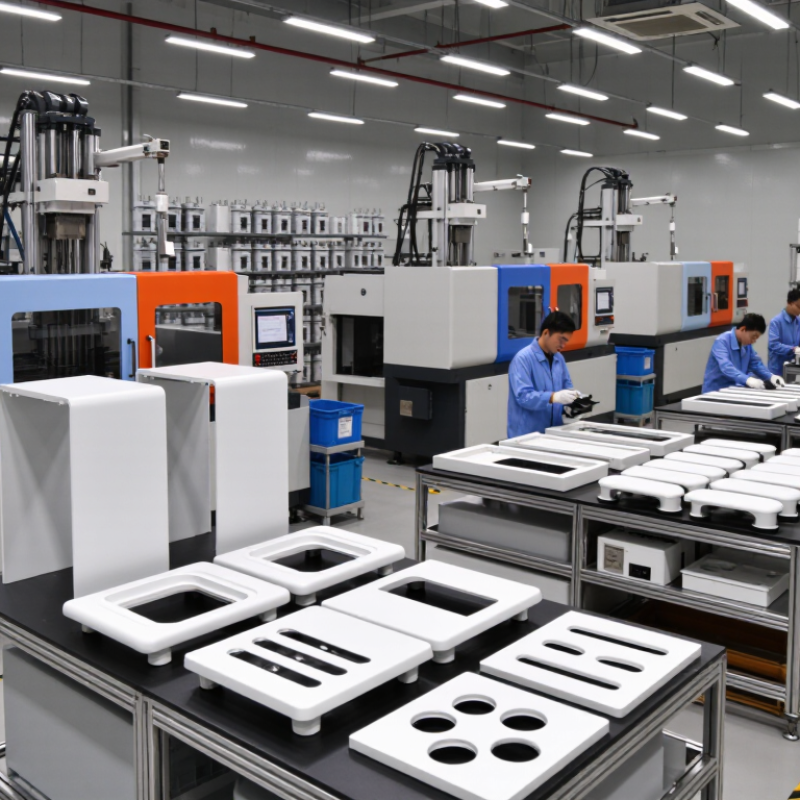
Appliance injection parts are plastic components formed by forcing molten resin into a shaped tool. They include refrigerator liners, washing-machine control panels, fan housings, and clips that hold wiring in place. A well-made part must fit tightly, resist heat or moisture, and survive repeated handling. The details matter: a warped panel can leave an uneven door gap, while a brittle clip may crack during assembly. Small parts, real consequences.

Injection molding supports repeatable production of complex shapes, but the process is not automatically precise. Resin choice, mold temperature, cooling time, and tool maintenance all affect dimensions and surface quality. The PlasticsEurope report Plastics – the Fast Facts 2024 estimates global plastics production at 413.8 million tonnes in 2023. That figure covers many uses, not just appliances, but it shows why material selection and waste reduction deserve attention. Regrind can reduce scrap in suitable applications; however, it may change strength or appearance, so testing is essential.

These components matter beyond appearance. Lightweight housings can reduce product mass, and accurately molded ducts can help guide airflow without unnecessary obstruction. For appliance makers and buyers, useful checks include dimensional consistency, impact performance, flame behavior where relevant, and traceable material specifications. A glossy finish is not proof of durability. Nor is the lowest quote always the lowest cost. The overlooked detail is often the one that fails later.

China Top 10 Appliance Injection Parts Suppliers? - What Are Appliance Injection Parts and Why Do They Matter?
No. Appliance Part / Supplier Capability Typical Material Common Applications Why It Matters Useful Supplier Checks
1 Exterior housings and covers ABS, HIPS, or PC/ABS blends Washers, refrigerators, countertop appliances Protect internal components and provide the visible finish; appearance defects and warpage can affect fit and perceived quality. Review color control, surface-finish samples, dimensional inspection, and experience with large cosmetic molds.
2 Control panels and bezels ABS, PC/ABS, or polycarbonate Ovens, washing machines, air conditioners Locate buttons, displays, and interfaces; precise openings and stable assembly dimensions are important. Check tolerance plans, insert or secondary-operation capability, and compatibility with coatings or printed graphics.
3 Internal structural brackets and supports PP, ABS, or glass-fiber-reinforced nylon (PA) Motor mounts, chassis supports, internal frames Maintain component position and help withstand assembly loads, vibration, and operating stresses. Ask for material-grade traceability, mold-flow or design-for-manufacturing review, and dimensional capability records.
4 Air ducts and ventilation components PP, ABS, or heat-resistant polymer grades selected for the design Dryers, air conditioners, range hoods, refrigerators Guide airflow and help limit leakage, noise, and interference with nearby parts. Confirm dimensional inspection of mating features and validation under the product's specified temperature conditions.
5 Water-contact housings and fittings PP, POM, or other application-qualified polymers Dishwashers, water dispensers, washing machines Help contain or route water; material choice and part design affect sealing and service life. Review leak-test methods, material documentation, dimensional checks, and validation against the appliance's operating conditions.
6 Handles, knobs, and latches ABS, PC/ABS, POM, or reinforced polymers as specified Refrigerators, ovens, laundry appliances Frequently touched parts must provide reliable operation, suitable surface quality, and adequate mechanical strength. Check assembly and cycle-test plans, color consistency, and verification of load-bearing features.
7 Food-contact components Food-contact-grade PP, SAN, or other approved grades for the intended market Blenders, coffee makers, food processors Material suitability and cleanable surfaces are important where parts contact food or beverages. Request declarations and test documentation applicable to the destination market and intended conditions of use.
8 Electrical enclosures and insulating parts Flame-retardant PC, ABS, or other specified engineering plastics Power modules, switches, connectors, appliance controls Separate or protect electrical components; the material and finished design must meet product-specific safety requirements. Verify the exact resin grade, certification documentation, lot traceability, and required safety testing.
9 Precision gears and moving mechanisms POM or application-selected nylon (PA) Timers, dispensers, adjusters, small drive mechanisms Dimensional consistency and suitable material properties help support smooth movement and repeatable operation. Review gear inspection methods, process controls, material conditioning requirements, and functional test results.
10 Overmolded and insert-molded components A compatible combination of thermoplastics, elastomers, or metal inserts Seals, grips, connectors, reinforced mounting points Combine materials or embed inserts to provide functions that a single molded material may not provide. Assess insert positioning, bonding or retention validation, process repeatability, and inspection of the completed assembly.
Note: This is a product-and-capability comparison, not a verified ranking of named suppliers. Material examples are common choices, not universal specifications; the correct resin and tests depend on part design, operating conditions, and destination-market requirements.

How to Evaluate Appliance Injection Parts Suppliers in China

China Top 10 Appliance Injection Parts Suppliers?

How to Evaluate Appliance Injection Parts Suppliers in China

Choosing an appliance injection parts supplier takes more than comparing unit prices. Ask how the factory controls resin batches, machine settings, and mold maintenance. These details affect color consistency, fit, and long-term part performance. Request material certificates and inspection records for the exact resin grade under consideration. Good documentation should match the delivered parts, not just a similar product.

Review the supplier’s process with a real component in hand. Check critical dimensions, gate marks, warpage, and surface finish against your drawings. Ask for first-article samples and measurement reports before approving production. A capable supplier should explain how it handles defects and what triggers corrective action. Look for calibrated gauges and documented checks on the production floor. Small details matter.

Evaluate the mold plan, too. Clarify who owns the tooling, how repairs are approved, and whether spare inserts are available. Discuss expected cycle times using your actual part geometry, not a generic estimate. A factory visit or live video walkthrough can reveal whether equipment and work areas match the proposal. Still, a polished tour is not proof of steady quality. Compare quotes line by line, then test communication with a specific technical question. Slow or vague replies are worth noting, though they do not tell the whole story. Ask for references from comparable appliance projects and verify the scope of their experience.

China’s Top 10 Appliance Injection Parts Suppliers

China’s Top 10 Appliance Injection Parts Suppliers

China’s appliance injection-molding sector includes suppliers serving refrigerators, washing machines, air conditioners, and small household devices. A useful “top 10” list should consider more than factory size. Look for demonstrated experience with appliance-grade plastics, stable production capacity, mold maintenance, and documented quality checks. A capable supplier can explain how it controls dimensions, surface finish, and color consistency across production batches. Small defects matter: an uneven clip or warped panel can complicate assembly.

Tips: Request sample parts and inspect them under consistent lighting. Ask how the supplier handles mold changes, material substitutions, and delivery delays. Check whether its quality records match the parts and production site being quoted. Rankings can shift by product type and project needs; a supplier strong in large exterior panels may not suit precision internal components. Verify claims directly. That takes time.

Before choosing from any shortlist, compare quotations on equal terms. Confirm resin grade, mold ownership, expected tool life, inspection frequency, and packaging requirements in writing. A low unit price may exclude important tooling or inspection costs. Even experienced buyers can overlook details when specifications are incomplete. One lesson is simple: a polished presentation is not proof of reliable production. Judge suppliers by samples, clear records, and how they respond when a process issue appears.

What Products and Services Do These Suppliers Offer?

China’s leading appliance injection-molding suppliers typically make more than visible plastic housings. Their product ranges can include refrigerator liners, washing-machine control panels, dishwasher baskets, air-conditioner grilles, fan blades, and small precision clips. Some provide mold design, prototype sampling, material selection, color matching, and mass production under one roof. For appliance buyers, this can reduce handoffs between vendors. But a broad catalog does not prove a supplier can hold tight tolerances across every part.

Look for practical process details: mold-flow analysis, dimensional inspection, tool maintenance, and documented resin traceability. A capable supplier should explain how it controls shrinkage around screw bosses and keeps glossy panels free from sink marks. It should also clarify whether testing covers impact, heat, and repeated chemical exposure. The OECD’s Global Plastics Outlook reports that global plastic waste more than doubled from 2000 to 2019, reaching 353 million tonnes; only 9% was ultimately recycled. That figure makes recycled-content options and scrap management worth asking about, not assuming.

Services may also include insert molding, overmolding, assembly, packaging, and export coordination. Some suppliers support engineering changes after pilot runs, when a latch feels too stiff or a panel gap looks uneven. Small details matter. Buyers should request sample parts, inspection records, and clear capacity plans before committing. A weakness remains: service descriptions can sound impressive, while actual mold upkeep varies widely. Check the evidence.

China Appliance Injection Parts Suppliers: Products & Services

Bars count example part types listed in each category; they are not supplier counts, market shares, or a ranking. Common services include mold design and making, injection molding, finishing, and assembly.

How to Choose the Right Supplier for Your Appliance Project

Choosing an appliance injection-parts supplier in China takes more than comparing unit prices. Start with the part itself: note its dimensions, resin type, surface finish, expected production volume, and any areas where tight tolerances matter. Ask how the supplier checks mold design, sample parts, and dimensional consistency. A clear inspection record is more useful than a broad promise of “high quality.” Request sample parts made with the intended material and process. Check the fit around screw bosses, clips, and mating surfaces. Small defects can cause assembly delays.

Tips: Share drawings and acceptance criteria before requesting a quote. Ask for a mold-maintenance plan, production lead time, and a written method for handling rejected parts. Confirm who owns the tooling and how changes are approved. Keep key decisions in writing.

Price still matters, but compare the full project cost, including mold changes, packaging, and shipping. Ask whether the quoted price assumes a particular order size or material grade. A factory visit or live video review can help you see equipment and quality checks, though one visit cannot prove every batch will be consistent. I would also ask for a small trial run before committing to a large order. It may feel slower, but discovering a fit problem early is usually less painful.