Choosing a ductless mini split heat pump is about more than comparing efficiency numbers. The right system should match your room layout, winter temperatures, electrical capacity, and comfort priorities. A quiet bedroom unit may matter more than a long feature list. In a drafty older home, sizing and placement deserve extra attention.
Building-science writer Martin Holladay has described a heat pump as “an air conditioner that can run in reverse.” That simple explanation captures the basic cycle, but it does not tell the whole story. Cold-weather performance, indoor-unit sound, and installation quality can vary widely. Small details matter.
This Top 10 guide compares ductless mini split heat pumps for 2026 using published specifications and practical selection factors. It considers heating capacity, efficiency ratings, operating-temperature ranges, controls, warranties, and system configurations. It also flags trade-offs, because no single model suits every home. Look closely at the conditions behind each efficiency rating; real-world results depend on climate, sizing, and installation. Very high efficiency is not a guarantee of lower bills.
Some details may change. Manufacturer specifications, product availability, and local incentives can shift during the year, so confirm them before buying. And be honest about the room. A sleek indoor unit cannot fix poor insulation or an unsuitable layout by itself. The goal is a system that delivers steady comfort without paying for capacity or features you will not use.
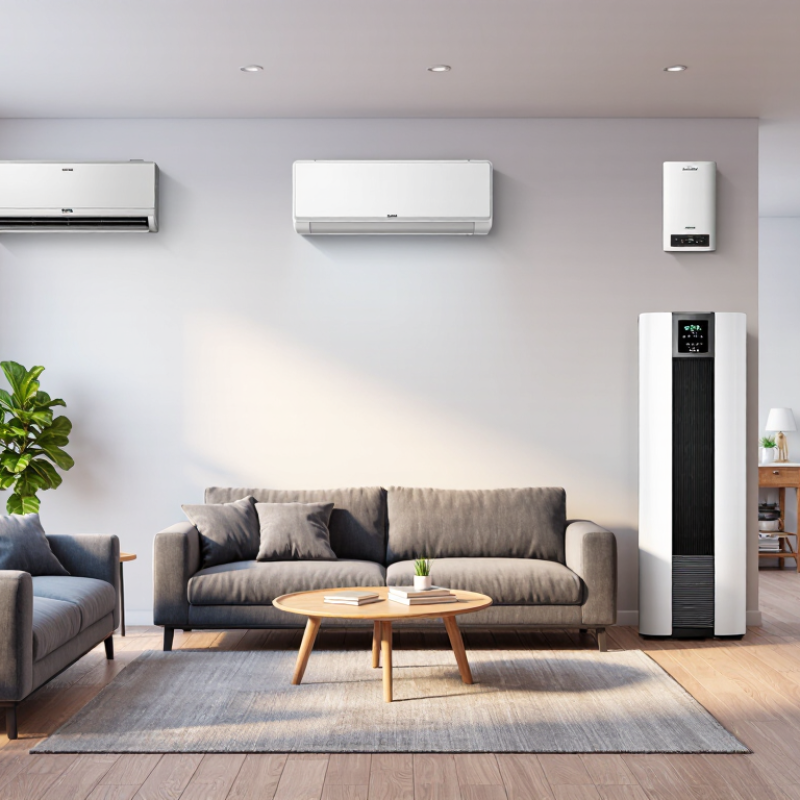
A ductless mini split transfers heat instead of generating it directly. The outdoor unit extracts heat from outdoor air, and refrigerant carries it indoors. In cooling mode, the cycle reverses, moving indoor heat outside. An indoor head then releases conditioned air into the room, without conventional ductwork. No combustion. In multi-zone homes, separate heads can serve bedrooms and living spaces, but airflow and placement still matter.
SEER2 measures seasonal cooling efficiency; HSPF2 measures seasonal heating efficiency. Both compare heat moved, in British thermal units, with electricity consumed. The U.S. Department of Energy’s updated test procedure introduced these ratings for equipment manufactured from 2023 onward, so older SEER and HSPF figures are not directly comparable (DOE, 2023). ENERGY STAR’s split-system criteria set minimums of SEER2 15.2 and HSPF2 7.8; its cold-climate qualification calls for HSPF2 8.1 and a coefficient of performance of at least 1.75 at 5°F (ENERGY STAR, central air conditioner and heat pump specification). Higher ratings suggest better seasonal efficiency, not guaranteed bill savings. Climate, sizing, defrost cycles, and installation can change real-world performance. Numbers need context.
Comparing ten ductless mini split heat pumps starts with matching the exact indoor and outdoor units in the AHRI directory. A rating for one combination may not apply to another. Check each certified combination and record its SEER2, EER2, and HSPF2 values where available. These ratings help compare seasonal efficiency under standardized test conditions. They do not predict every home’s energy use.
Then check whether each model meets the current ENERGY STAR criteria for its product category. Certification is a useful screen, not a ranking of comfort or reliability. Numbers need context. Compare heating capacity at low outdoor temperatures, not just the headline efficiency figures. Look for minimum output, too: a unit that can turn down smoothly may avoid frequent cycling in a small room. Check listed sound levels if the indoor head will sit near a bed or desk. Small details matter.
A spreadsheet helps keep ten candidates honest. Include exact model numbers, certified ratings, capacity, sound, and warranty terms. Ask an installer to confirm sizing and refrigerant-line requirements for the actual room. A high rating cannot fix poor placement or an oversized system. I would still treat published figures as a starting point; real conditions rarely match a test chamber perfectly. That gap deserves attention.
A 2026 ductless mini-split shortlist should compare heating output at 5°F, not just seasonal efficiency. At that temperature, a unit may deliver less heat than its headline capacity suggests. Check the manufacturer’s extended performance table for capacity and coefficient of performance (COP) at 5°F. A warm room can still feel drafty if the system cannot meet the home’s heat loss.
ENERGY STAR’s Cold Climate criteria use a COP of at least 1.75 at 5°F and require at least 70% of the unit’s 47°F heating capacity at that temperature. These are useful screening benchmarks, not promises about performance in every home. The Northeast Energy Efficiency Partnerships’ cold-climate heat-pump product list also reports low-temperature performance data for comparing equipment. Numbers need context: sizing, defrost cycles, insulation, and outdoor wind can all affect comfort. A published test point is not a guarantee for a specific room.
Tips: Ask for the 5°F capacity, not only the model’s nominal rating. Compare it with a room-by-room heat-loss estimate, and check the system’s balance point. One detail is easy to miss: a unit may keep producing heat below 5°F, but its capacity can fall as the temperature drops. That gap deserves a closer look.
A ductless mini split can be an efficient way to heat and cool a home, but the headline figure needs context. The U.S. Department of Energy says heat pumps can use up to 75% less energy for heating than electric resistance systems. That is the key. It is not a promise that every household will cut its total energy use by that amount.
Actual results depend on the equipment, local weather, home insulation, and installation quality. A poorly sized unit may run inefficiently or leave rooms uncomfortable. Leaky windows and open stairwells can also undermine performance. On a cold morning, check the unit’s low-temperature capacity, not just its advertised efficiency rating.
When comparing ductless systems for 2026, look for published seasonal efficiency ratings and clear performance data at lower outdoor temperatures. Ask whether the proposed capacity matches each room’s heat loss, and confirm that the installer will test the system after setup. Even then, projections are estimates; household habits and weather vary. The 75% figure is useful, but it is a best-case comparison, not a universal bill forecast.
How heat pump energy use compares with electric resistance heating
The U.S. Department of Energy says heat pumps can use up to 75% less electricity for heating than electric resistance systems. This chart converts that maximum savings figure into a normalized index: 100 for the resistance-heating baseline and 25 for the maximum-savings heat pump case. It is an efficiency benchmark, not a ranking of specific products; actual performance varies with climate, equipment, installation, and use.
For a 2026 ductless mini-split shortlist, match capacity to the home—not just its floor area. Ask a qualified installer to calculate room-by-room heating and cooling loads, accounting for insulation, window exposure, ceiling height, and air leakage. An oversized unit may cycle too often; an undersized one can struggle on a cold night. That detail is easy to overlook.
Climate matters. ENERGY STAR’s cold-climate heat-pump criteria require a coefficient of performance of at least 1.75 at 5°F and at least 70% of rated heating capacity at that temperature. Compare those figures with your local winter design temperature, then check the unit’s operating limits. The U.S. Department of Energy says heat pumps can use up to 75% less electricity for heating than electric resistance systems. Real savings still depend on the home, usage, and electricity rates.
Tips: Request a load calculation and a written installation scope. Check line-set length, condensate drainage, electrical capacity, and outdoor-unit clearance before signing. Ask your utility and state energy office which 2026 rebates apply; eligibility and deadlines can change. Keep the paperwork. A neat model comparison can miss installation quality, and that is where my own confidence would need a second look.
These are brand-neutral system profiles for comparing common ductless heat-pump applications, not specifications for individual products. Capacity and efficiency vary by model; confirm the manufacturer’s performance data and local program requirements before purchasing.
| # | System profile | Typical capacity | Approx. application | Climate and efficiency targets | Installation considerations | Rebate check |
|---|---|---|---|---|---|---|
| 1 | Compact single-zone | 6,000–9,000 BTU/h | Small, well-insulated room or studio; roughly 150–400 sq. ft. as a starting estimate | Mild to mixed climates. Compare certified efficiency ratings and verify low-temperature heating output if winters are cold. | Short refrigerant run and clear airflow help; avoid sizing from floor area alone. | Check utility and state offers for eligible equipment, contractor rules, and required documentation. |
| 2 | Small-room comfort system | 9,000 BTU/h | Bedroom, office, or insulated attic room; approximately 200–450 sq. ft. | Mild or mixed climates. Look for low minimum output to reduce cycling in modest heating and cooling loads. | Place the indoor head for even air distribution; check outdoor-unit noise and condensate drainage route. | Eligibility may depend on the exact system combination, not just nominal capacity. |
| 3 | Standard single-zone | 12,000 BTU/h | Living area or larger bedroom; approximately 300–600 sq. ft. | Suitable in many regions when correctly sized. Compare SEER2 and HSPF2 ratings for the specific matched system. | Confirm electrical supply, line-set length limits, wall penetration, and outdoor-unit clearances. | Search current local program lists; incentives and qualifying efficiency thresholds can change. |
| 4 | Cold-climate single-zone | 12,000–18,000 BTU/h | Main room or zone in a colder region; size from a room-by-room load calculation | Prioritize documented heating capacity at low outdoor temperatures, not just the advertised minimum operating temperature. | Plan for snow clearance, defrost-water drainage, and appropriate outdoor-unit elevation. | Cold-climate or whole-home offers may have separate equipment and installation criteria. |
| 5 | Large-room single-zone | 18,000 BTU/h | Open-plan living space or large addition; approximately 600–1,000 sq. ft., depending on loads | Useful across varied climates when capacity is matched to local design conditions and insulation quality. | Check that one indoor head can serve the space; long or divided layouts may need another distribution approach. | Ask whether the incentive applies to a single-zone installation and the selected system pairing. |
| 6 | High-load single-zone | 24,000 BTU/h | Large room, workshop, or open area; roughly 800–1,400 sq. ft. as a preliminary range | For hot or cold extremes, check rated capacity at the relevant outdoor temperatures and the home’s design load. | Electrical requirements and line-set limits vary; have the installer confirm them before equipment selection. | Do not assume a larger capacity qualifies for a larger rebate; verify program-specific rules. |
| 7 | Two-zone multi-split | 18,000–24,000 BTU/h outdoor unit | Two rooms with independent indoor units; combined capacity depends on the approved system combination | Match each zone’s heating and cooling load; check capacity when both zones operate at once. | Confirm branch-box or port requirements, piping lengths, and compatibility of indoor and outdoor units. | Some programs treat multi-zone systems differently; confirm eligible combinations in writing. |
| 8 | Three-zone multi-split | 24,000–30,000 BTU/h outdoor unit | Three bedrooms or a small home with distinct comfort zones | Compare system-level efficiency and simultaneous heating capacity for the exact indoor-unit combination. | More piping and indoor units increase design complexity; plan routes and service access before installation. | Check whether rebates require a qualified contractor, pre-approval, or post-installation inspection. |
| 9 | Four-zone whole-home layout | 30,000–36,000 BTU/h outdoor unit | Several rooms or a compact home; total capacity must be load-calculated | Assess room-by-room loads, minimum modulation, and low-temperature output to avoid oversizing. | Review electrical service, permitted refrigerant piping, condensate disposal, and local code requirements. | Whole-home incentives may require specific documentation or energy assessments; confirm before signing. |
| 10 | Large multi-zone system | 36,000–48,000 BTU/h outdoor unit | Larger homes or multiple floors with several independently controlled rooms | Verify actual combined capacity at local design temperatures; a single outdoor unit may not meet every simultaneous peak load. | Requires careful system design, equipment matching, commissioning, and accessible service locations. | Compare current state, utility, and local offers; confirm stacking rules and application deadlines. |
Planning note: Square-foot ranges are rough screening estimates, not sizing recommendations. A qualified HVAC professional should calculate heating and cooling loads and verify matched-system ratings, electrical needs, permits, and local incentive eligibility. Rebates are not guaranteed and vary by location, program funding, equipment, and installation date.