China Top AC Checkup Suppliers for Global Buyers

Choosing China’s top AC checkup suppliers requires more than comparing factory prices. Global buyers need reliable inspections, clear communication, and evidence of technical capability. A professional ac checkup should examine refrigerant pressure, electrical connections, airflow, drainage, compressor performance, and visible safety risks. These checks help identify problems before installation, shipment, or seasonal operation.

Experienced suppliers usually provide structured reports with photographs, measurement records, and recommended corrective actions. Buyers should also review service coverage, technician training, response times, and familiarity with international equipment requirements. Details matter. A polished website is not enough. Factory audits, sample inspections, and documented quality procedures offer stronger evidence. Not every supplier fits every project.

This guide introduces leading Chinese suppliers that serve commercial, residential, and industrial air-conditioning markets. It considers technical experience, inspection depth, communication quality, and after-sales support. Some companies may excel in field diagnostics, while others offer better laboratory testing or regional service networks. Buyers should compare these differences carefully.

There is no universal “best” supplier. A provider suitable for a hotel project may not suit a small distributor. Product age, climate, system design, and maintenance history can change the inspection result. That point is often overlooked. A reliable sourcing decision should combine supplier claims with independent verification, written specifications, and practical trial orders. Trust takes testing. This approach helps global buyers reduce avoidable downtime while building longer-term cooperation with capable Chinese AC service partners.

China Top AC Checkup Suppliers for Global Buyers

Global AC Checkup Demand: IEA Reports Cooling Uses 10% of Electricity

Cooling is no longer a minor building expense. The International Energy Agency reports that cooling uses about 10% of global electricity. That figure becomes tangible in a warehouse, where compressors run beneath a hot metal roof. A poorly maintained unit may draw excessive power while delivering weak airflow. For global buyers, AC checkups are an energy decision, not only a repair task.

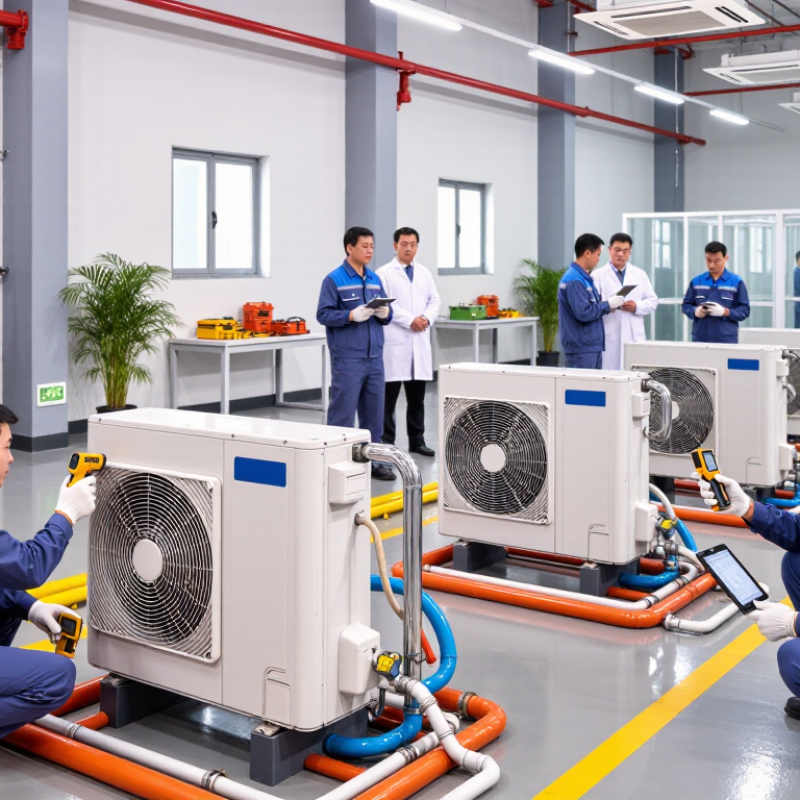
Reliable suppliers should provide trained technicians, documented procedures, and measurement-based reports. A useful visit includes filter inspection, coil cleaning, refrigerant-pressure checks, electrical testing, drain-line examination, and airflow readings. Technicians should record temperature differences at supply and return vents. They should photograph damaged insulation or corrosion before recommending work. Clear records help buyers compare service quality across factories, offices, hotels, and cold-storage sites. Experience matters here. Dust levels, humidity, voltage stability, and local operating habits can change the diagnosis.

International purchasing teams should verify technician qualifications, safety practices, calibration dates, response times, and after-service support. Suppliers should explain findings in plain English, with readings, risks, and estimated energy impact. Claims about large savings deserve independent verification. Numbers can be misunderstood. Even a careful checkup is not perfect; a clean coil cannot fix poor insulation or an undersized system. Buyers may overlook seasonal demand when reviewing one visit. A stronger process schedules follow-up checks during peak heat, tracks electricity use, and tests whether comfort improves without unnecessary cooling.

AC Checkup Services in China: Testing Scope, Standards, and Deliverables

China’s AC checkup suppliers support global buyers with factory inspections and laboratory testing. Their work should match the buyer’s target market, product type, and risk level. A practical checkup may cover appearance, dimensions, wiring, grounding, insulation resistance, startup current, cooling capacity, airflow, noise, vibration, and refrigerant leakage. Technicians can also review labels, manuals, packaging, and traceability records.

Relevant standards may include IEC 60335-1, IEC 60335-2-40, ISO 5151, and market-specific energy requirements. The exact standard depends on the equipment and destination. Qualified providers should explain the test method before sampling begins. They should also use calibrated instruments and record environmental conditions, such as room temperature and humidity. Small details matter.

A reliable deliverable includes a signed report, test readings, product photographs, sample numbers, calibration information, and a clear list of nonconformities. Buyers may request corrective-action verification after the factory responds. In practice, no inspection is perfectly complete. A checklist can miss unstable performance during repeated operation. For this reason, experienced teams often combine document review, witnessed testing, random sampling, and follow-up questions. Some reports remain too general, and that weakness deserves attention before approval. Clear acceptance limits make the final decision more consistent.

Supplier Qualification: ISO/IEC 17025 Labs, Equipment, and Traceability

For global AC buyers, supplier qualification starts with laboratory competence, not a polished equipment list. An ISO/IEC 17025 accredited laboratory should show its current scope, test methods, uncertainty statements, and accreditation body. The scope matters. It must cover the exact AC capacity range, refrigerant system, and performance measurements being purchased. The International Energy Agency reports that space-cooling electricity demand could more than triple by 2050. That projection raises the cost of weak verification.

During a supplier audit, request calibration certificates for power analyzers, flow meters, pressure sensors, thermometers, and psychrometers. Each certificate should link results to national or international measurement standards through an unbroken traceability chain. Check calibration dates, serial numbers, uncertainty, and acceptance criteria. A chamber may look impressive. Yet unstable humidity or airflow can distort capacity results. ISO/IEC 17025 requires valid methods, competent personnel, controlled records, and impartial reporting. Ask to witness a repeat test using a sealed sample, logged ambient conditions, and raw data exports.

The 2023 UNEP Global Cooling Watch report connects rising cooling demand with urgent efficiency improvements. For buyers, comparable data is more useful than a low quotation. Review sample identification, test configuration, software version, and corrective-action history. A common blind spot is overvaluing chamber size while undervaluing sensor drift. That mistake is easy to repeat. A stronger process compares repeatability, uncertainty, and report transparency across suppliers. No laboratory is perfect, and a missing record deserves a direct question, not an assumption.

China Top AC Checkup Suppliers for Global Buyers - Supplier Qualification: ISO/IEC 17025 Labs, Equipment, and Traceability
Qualification Category Assessment Dimension Evidence or Technical Requirement Buyer Verification Method Qualification Benchmark
Laboratory competence ISO/IEC 17025 accreditation Valid ISO/IEC 17025:2017 accreditation covering the specific measurement activities required for air-conditioning inspection or testing. Review the accreditation certificate, schedule of accreditation, validity dates, and stated measurement scope. Required for accredited calibration or testing claims
Scope suitability Measurement range and capability The accredited scope should cover the required quantities, such as temperature, relative humidity, pressure, electrical current, voltage, airflow, or refrigerant mass. Compare the buyer’s test points and acceptance limits with the laboratory’s published scope and measurement ranges. Every critical measurement must fall within the declared scope
Calibration traceability Traceability to the International System of Units Calibration results should be linked through an unbroken documented chain to the SI through a national metrology institute or an accredited calibration laboratory. Check calibration certificates for reference standards, certificate numbers, uncertainty statements, and traceability declarations. Unbroken traceability required for critical instruments
Measurement uncertainty Uncertainty evaluation Calibration or test reports should state measurement uncertainty using a documented method consistent with ISO/IEC 17025 requirements. Review the uncertainty budget, coverage factor, confidence level, and whether uncertainty is suitable for the buyer’s tolerance limits. Uncertainty must be technically adequate for the decision rule
Temperature testing Air and surface temperature measurement Calibrated temperature sensors or thermometers with suitable range, resolution, response characteristics, and environmental protection for HVAC service conditions. Check calibration points, correction values, sensor identification, and test records for supply-air, return-air, coil, or ambient measurements. Calibration points should bracket the intended operating range
Humidity testing Relative humidity measurement Calibrated thermohygrometers or humidity probes with documented accuracy and temperature compensation where applicable. Verify humidity calibration points, stated uncertainty, stabilization time, and environmental test conditions. Suitable for the specified indoor-air or equipment test range
Refrigeration diagnostics Pressure, vacuum, and refrigerant charge measurement Calibrated pressure gauges, vacuum gauges, and refrigerant scales with appropriate pressure ratings and resolution for the refrigerant system under inspection. Review calibration certificates, pressure ranges, vacuum performance records, scale verification results, and equipment identification numbers. All instruments must be rated for the refrigerant circuit and test pressure
Airflow verification Air velocity and volume-flow measurement Calibrated anemometers, airflow hoods, or equivalent instruments with a documented measurement method and defined sampling locations. Request the test procedure, instrument calibration data, duct or grille measurement points, and calculation method for airflow volume. Repeatable method with defined sampling and calculation rules
Electrical safety Electrical measurement capability Calibrated instruments for voltage, current, resistance, insulation resistance, continuity, and protective-conductor checks when electrical safety is within the service scope. Confirm instrument categories, voltage ratings, calibration status, test-lead condition, and operator competency records. Equipment must be appropriate for the system voltage and risk level
Leak detection Refrigerant leak inspection Leak-detection equipment with a documented detection threshold, operating method, maintenance history, and calibration or performance-check records. Review sensitivity specifications, functional-check records, probe condition, and the written leak-testing procedure. Detection capability must match the applicable service requirement
Equipment control Calibration status and identification Each critical instrument should have a unique identification code, calibration status, next-review date, and protection against unauthorized adjustment. Inspect the equipment register, calibration labels, maintenance records, and out-of-tolerance handling procedure. 100% identification and current status for critical equipment
Calibration interval Review frequency Calibration intervals should be established using risk, usage frequency, stability history, manufacturer information, environmental exposure, and previous results. Check the documented interval rationale rather than accepting a fixed interval without technical justification. A 12-month interval is common in practice but is not a universal ISO/IEC 17025 requirement
Reference standards Control of reference equipment Reference standards used to verify field instruments should have higher accuracy than the instruments being checked and should be protected from damage and unauthorized use. Review reference-standard specifications, calibration certificates, storage conditions, and handling responsibilities. Reference standards must support the required measurement uncertainty
Personnel competence Technical training and authorization Personnel should demonstrate competence in HVAC measurement procedures, instrument operation, refrigerant safety, electrical safety, and data recording. Review training records, competency assessments, authorization lists, and practical evaluation results. Only authorized and technically competent personnel may issue results
Test method control Documented inspection procedures Procedures should define equipment setup, environmental conditions, stabilization time, measurement points, sampling quantity, acceptance criteria, and data treatment. Request controlled procedures and verify revision numbers, approval records, and consistency with the purchase specification. Controlled method required for every repeatable inspection activity
Environmental control Laboratory and field conditions Temperature, humidity, vibration, electromagnetic interference, cleanliness, and other environmental factors should be controlled or recorded where they can affect results. Review environmental monitoring logs and determine whether conditions were within the method’s stated limits during testing. Environmental effects must be controlled, corrected, or included in uncertainty
Report integrity Inspection and calibration report content Reports should identify the client, equipment under test, instrument identifiers, method, date, conditions, results, units, uncertainty where applicable, and approval personnel. Evaluate a redacted sample report and confirm that results are clear, reproducible, and linked to the applicable equipment and method. Complete result-to-equipment-to-method linkage required
Nonconforming work Out-of-tolerance and invalid-result control The supplier should have a procedure for equipment found out of tolerance, affected-result review, customer notification, corrective action, and record retention. Request a sample nonconformance workflow and verify evidence of root-cause analysis and impact assessment. Documented impact assessment and corrective action required
Quality records Data retention and change control Raw data, calibration certificates, inspection reports, equipment history, revisions, and approvals should be protected from loss or unauthorized alteration. Review record-retention policy, backup controls, access permissions, revision history, and retrieval samples. Records must remain identifiable, retrievable, and protected
International acceptance Recognition of accreditation and certificates For cross-border procurement, buyers should confirm whether the accreditation body and issued certificates are recognized through applicable international or regional arrangements. Verify the accreditation body’s current recognition status and confirm that the certificate scope covers the requested service. Recognition and scope should be confirmed before purchase order release

Comparing China’s Top Suppliers: Accuracy, Capacity, Lead Time, and Cost

China’s leading AC checkup suppliers differ sharply in accuracy, production capacity, lead time, and cost. Accuracy begins with calibrated gauges, temperature sensors, airflow meters, and electrical testers. Ask for calibration records, test tolerances, and sample inspection data. A reliable supplier should explain how technicians record pressure, refrigerant temperature, noise, and power consumption during each checkup.

Capacity matters when seasonal demand rises. Some factories can process hundreds of units daily, while smaller teams offer closer technical supervision. Request recent output figures, technician numbers, workshop photographs, and shift arrangements. A clear capacity plan reduces delays. Still, figures may be optimistic. Buyers should verify them through trial orders and production updates.

Lead time depends on equipment availability, labor, testing procedures, and export preparation. Standard checkups may take several days, while customized inspection programs need longer. Cost comparisons should include labor, replacement components, calibration, packaging, travel, and possible retesting. The lowest quotation can hide weak documentation or rushed measurements.

In practical sourcing, a buyer’s checklist should define acceptance limits before production starts. For example, record a compressor’s current, discharge temperature, airflow, and operating noise under stated conditions. This creates comparable evidence across suppliers.

One weakness remains common: some suppliers communicate quickly before payment but respond slowly during technical disputes. Written response times and inspection responsibilities help expose that risk early.

Buyer Verification: IEC 60335-2-40 Compliance and UNEP’s 2050 Cooling Forecast

China Top AC Checkup Suppliers for Global Buyers

For global buyers, supplier verification starts with IEC 60335-2-40 compliance. This standard covers safety requirements for air conditioners, heat pumps, and dehumidifiers. It is especially important when equipment uses flammable refrigerants. A credible checkup supplier should review the exact model, refrigerant type, charge limit, wiring, pressure protection, and enclosure design.

Ask for current test reports, not copied certificates. Each report should show the model number, laboratory details, test conditions, and applicable edition. Factory inspectors should also compare production units with approved samples. Small differences matter. A changed compressor or sensor can affect safety performance. I have found that document reviews often miss these physical changes. That weakness deserves attention.

UNEP forecasts that cooling demand may more than triple by 2050. This pressure will increase purchasing risks and technical expectations. Buyers should therefore assess energy performance, refrigerant impact, service access, and spare-part controls. Check whether technicians understand recovery procedures and leak detection. Request calibration records for electrical and pressure-testing equipment. Speak with production workers, not only sales staff. Their answers can reveal training gaps.

No supplier is perfect. That includes experienced factories. A transparent supplier admits limitations and provides corrective evidence. A vague promise is not verification. Detailed records, repeat testing, and independent inspection create stronger purchasing confidence.